
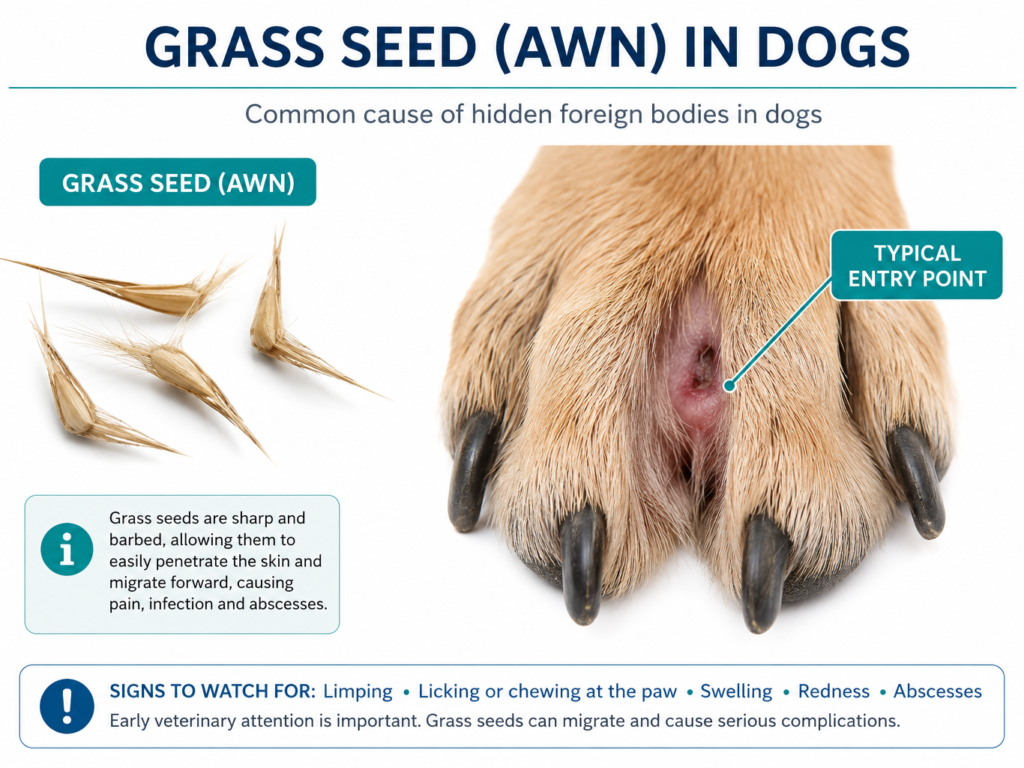
Summer is the perfect time for longer walks, countryside adventures, and outdoor fun with your dog. However, the warmer months also bring a seasonal risk that many owners don’t realise can quickly become a veterinary emergency: grass seeds.
These small, dart-shaped seeds are designed to attach to fur and can easily work their way into a dog’s paws, ears, eyes, nose, or skin. Once embedded, they continue to travel deeper into the body, causing pain, infection, and sometimes requiring surgical removal.
Signs Your Dog May Have a Grass Seed
Keep an eye out for:
- Excessive licking of a paw
- Sudden limping
- Swelling between the toes
- Head shaking or scratching at the ears
- Squinting or excessive tearing from an eye
- Repeated sneezing or pawing at the nose
- Sudden lumps, swelling, or wounds that won’t heal
These symptoms often appear shortly after a walk through long grass, fields, or meadows.
Why Quick Action Matters
Grass seeds don’t break down naturally and can continue to migrate through tissues, leading to painful abscesses, infections, and more serious complications if left untreated.
The sooner a grass seed is identified and removed, the easier and less invasive treatment is likely to be.
Preventing Grass Seed Problems
- Check your dog thoroughly after every walk.
- Pay special attention to paws, ears, eyes, and under the coat.
- Keep fur around feet and ears trimmed.
- Avoid long, dry grass where possible during peak summer months.
Concerned About Your Pet?
If your dog develops any of the signs above after a walk, it’s always best to seek veterinary advice promptly.
If you’re worried your pet may have a grass seed injury or requires urgent attention, contact The Lighthouse Veterinary Clinic. Early treatment can prevent a small problem from becoming a painful emergency.
The Lighthouse Veterinary Clinic
📞 01243 765 247
📧 247@thelighthousevets.com
🌐 lighthousevets.com
Enjoy your summer walks—but don’t forget to give your dog a quick post-walk check. It could save them a great deal of discomfort and help avoid an unexpected trip to the vet.


